




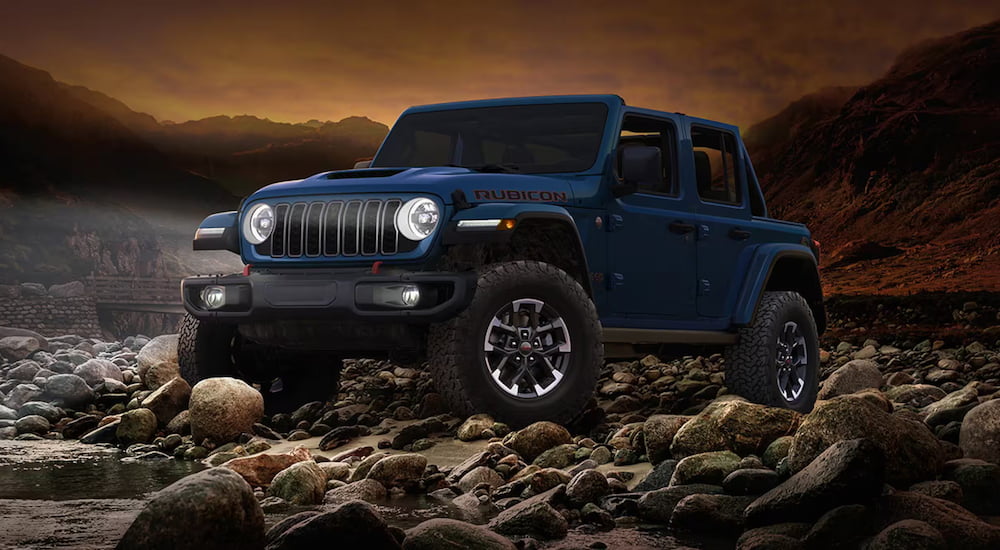
The Jeep Wrangler has been clawing through mud, scaling rock walls, and splashing through remote streams since the late 1980s, but the midsize SUV traces its heritage back to the original off-road models of the Civilian Jeep (CJ). Like its predecessor, the Wrangler brings military-grade design to the masses, allowing drivers to overcome whatever roadblocks they might encounter while turning heads with its unique, boxy figure. In 2026, the Wrangler celebrates its 40th anniversary with 12 limited-edition models set to debut throughout the year. The Moab 392 marks the first release and will be followed by a Whitecap trim that adds a frosty, all-white exterior.
It’s an exciting time to seek out a Jeep Wrangler for sale, but the brand’s flagship model isn’t the only option in the off-road-ready segment. The Toyota 4Runner offers a similar off-road pedigree and was recently graced with a long-overdue refresh with the debut of the sixth-generation model in 2025. How do these two midsize options match up when it comes to off-road ability and everyday efficiency? Let’s explore each SUV and see why Jeep has become synonymous with the concept of off-road performance.
Battle of the Base Engines
While Wrangler and 4Runner might occupy the same midsize segment and share an off-road focus, the two SUVs differ pretty drastically in terms of pure performance. There are plenty of ways to demonstrate these differences, but a quick comparison of each model’s base engine is probably the most relevant. Jeep has stuck with the tried-and-true approach, equipping the 2026 Wrangler with a 3.6L V6 that’s capable of producing some 285 hp. The Wrangler can also be outfitted with a six-speed manual transmission instead of the standard eight-speed automatic, with the old-school design offering improved control and helping to create a strong connection between man and machine. Toyota takes a different tack, prioritizing fuel economy with a 2.4L turbocharged I-4 that’s limited to just 278 hp and skipping out on a manual option altogether.
The seven-hp gap between the two models might not seem like a significant margin, but it certainly speaks to each model’s unique ethos. The Wrangler was designed with off-road action in mind, and is happy to trade a few MPG for the added power needed to conquer tough terrain. The 4Runner might be able to handle itself when the going gets rough, but it is ultimately designed as a daily driver that just so happens to be prepped for off-road duty. There’s nothing wrong with Toyota’s well-rounded approach, but it could leave owners feeling a little underpowered in off-the-grid environments.
This would be an understandable trade-off if the 4Runner were significantly more efficient than its Jeep rival, but that’s just not the case. At 20 MPG in the city/26 MPG on the highway, the Toyota just barely edges out the V6-equipped Jeep at 18 MPG in the city and 23 MPG on the highway. The Wrangler also offers 4WD as standard, while the powertrain is an optional upgrade on the base 4Runner. Throw in the fact that the V6 gives the entry-level Wrangler a zero-to-60-mph time of 6.1 seconds, and it’s hard to find a weak point when it comes to the SUV’s performance credentials.
Unlocking Extra Power
It might not be able to keep pace with its entry-level engine, but the 4Runner makes up a little ground with an available hybrid version of the iForce engine that adds a 48-hp electric motor to boost output to 326 hp. Unfortunately, the electric-assisted powertrain also adds a pretty penny to the SUV’s bottom line, with an MSRP that’s $5,000 to $10,000 higher than the base model.
Torque is the watchword for any adventure-ready model, providing drivers with all the power they need to find success on the road less traveled, but you don’t have to invest in a hybrid if you want to enjoy plenty of low-end muscle. The Wrangler’s optional 2.0L turbocharged I-4 puts a premium on this important metric, offering 295 lb-ft of torque and delivering a satisfying synthesis of performance and efficiency. The 2.0L engine can also match the base model’s notable 5,000-lb max towing capacity.
However, if you’re searching for the market’s most powerful Wrangler, it’s time to consider the Moab. Named after Utah’s off-road mecca, the Wrangler’s new Moab 392 trim takes its name from a massive HEMI V8 that measures in at 392 cu.in. (or 6.4L). The Apache V8 offers a nice, round 470 hp and 470 lb-ft of torque, and turns the Wrangler into a legitimate speed demon with the ability to sprint from zero to 60 mph in just 4.0 seconds. The 4Runner’s most potent powertrain can’t even begin to approach that figure, with even the hybrid logging a lethargic 6.7 seconds. The HEMI’s added weight does reduce the SUV’s towing capacity to 3,500 lbs, but for some, the added performance is worth it.
A Complete Off-Road Arsenal
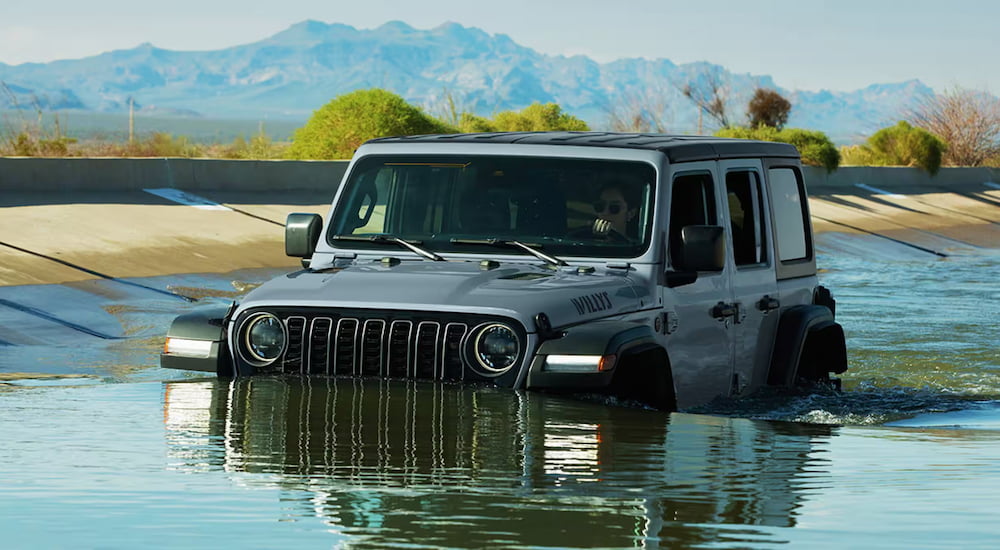
A solid engine lineup is a good starting point, but it’s the Wrangler’s comprehensive arsenal of off-road gear that makes the midsize Jeep such a success story. Every model is equipped with part-time 4WD, while upper trims can be paired with a full-time system that allows the Wrangler to conquer even the roughest roads. Jeep’s generous approach means buyers won’t have to invest in pricey models and equipment packages to enjoy a little off-road fun, with the base Sport model serving as a helpful case in point. The Sport trim features underbody skid plates for ample protection, while standard tow hooks are sure to come in handy in a recovery scenario. The Sport S adds some important comfort and convenience tech like adaptive cruise control and a leather-wrapped steering wheel, but it’s the Willys trim that sets the stage for things to come. Named after the original Willys Jeep, the modern Willys adds some legitimate off-road gear, including 32-inch all-terrain tires, an electronic locking rear differential, rock rails, and heavy-duty front and rear axles with shorter gearing that improve both torque and durability.
The Wrangler’s Sahara trim might improve the Jeep’s luxury appeal, but if you really want to up your off-road game, it’s hard to do better than the Rubicon trims. Designed to honor another off-road hot spot in California’s Rubicon Trail, the base Rubicon trim is a ready-made off-road machine. It includes all of the gear you’ll find on the Willys trim, as well as an electronically disconnecting front stabilizer bar that ensures there’s always a healthy amount of contact between your tires and the trail. A 4:1 low-range gearing setup provides maximum traction.
What about that all-important X-factor? The Rubicon X rounds out the Jeep’s off-road array with some key luxury features like an Alpine stereo system, leather upholstery, and a three-piece hardtop, but that’s just a small part of the trim’s appeal. The Rubicon X also boasts steel bumpers and an integrated Warn winch that’s sure to prove useful when trying to free yourself from a particularly sticky stretch of trail. The trim also comes with the Xtreme 35 package, which includes huge 35-inch tires, 4.56:1 axle gearing, and a 1.5-inch suspension lift that brings the Jeep’s total ground clearance to 12.9 inches.
That said, the package’s biggest selling point is its beadlock-capable wheels. The ability to air down your tires can make all the difference when tackling loose terrain like sand or snow, but it also carries the risk of a blowout. The Wrangler’s beadlock-capable wheels essentially lock the tires right onto the rim, preventing blowouts and turning the Jeep into an all-terrain beast. Finally, there’s the Rubicon 392, which, as the name implies, has been treated to the hulking 6.4L HEMI V8. A 470-hp SUV is already a pretty enticing option, but the Rubicon 392 sweetens the pot with additional components like a two-inch suspension lift, Fox shock absorbers, high-performance brakes, and the full contents of the Xtreme 35 package.
The 4Runner has been steadily upping its off-road arsenal in recent years, introducing new trims that allow the SUV to handle the rigors of the all-terrain lifestyle. The most recent addition came in 2025 as Toyota unveiled a Trailhunter trim aimed at the overlanding niche. For those who tend to limit their automotive excursions to paved surfaces, overlanding is a unique form of long-distance adventure driving where enjoying the journey, not reaching a specific destination or overcoming a particular obstacle, is the primary goal. A good overlanding rig needs to provide a solid combination of off-road performance, comfort, and utility. The Trailhunter largely delivers with Old Man Emu off-road shocks, frame-mounted side rock sliders, an integrated air compressor, and an air intake snorkel that allows the SUV to ford streams without worrying about a waterlogged engine.
The TRD Pro slots in right beside the Trailhunter in the 2026 lineup. It offers a full complement of heavy-duty components, including Fox off-road shocks, an air intake, fog lights, skid plates, prewired auxiliary switches, and a disconnectable stabilizer bar that improves wheel articulation when you need it most. The TRD Off-Road is the SUV’s entry-level off-road option, and while it does come equipped with Bilstein shock absorbers, a locking rear differential, and some light off-road protection, the trim is a little underwhelming when compared to the Wrangler lineup. The TRD Off-Road sees the model enhanced with a few premium features, including a 14-speaker sound system, ventilated front seats, and synthetic leather upholstery, along with a robust surround-view camera array that provides helpful POVs.
Putting 4WD at the Forefront
The Jeep offers clear advantages in off-road ability, and we haven’t even touched on the SUV’s available 4WD systems. While the 4Runner can be equipped with both part-time and full-time AWD 4WD systems, the base model sticks to a 2WD design that significantly limits its outdoorsy appeal. A two-speed transfer case, Active Traction Control system, and Multi-Terrain Select system with specific settings for Snow, Mud & Sand, and Rock & Dirt certainly help the SUV’s case, but it’s no match for the Jeep’s own purpose-built design. The Wrangler’s part-time 4WD system, branded Command-Trac, offers four distinct driving modes, with options ranging from 2WD to 4Hi and 4Lo. The system delivers an even 50/50 torque split between the front and rear axles, and maximizes efficiency by allowing drivers to dial in a precise level of performance while earning its keep in tough weather scenarios.
Selec-Trac takes all of the guesswork out of Wrangler ownership, automatically adjusting the Jeep’s torque in response to changing road conditions with an additional 4Hi Auto mode. The Selec-Trac system enters the picture on the Sahara trim, and it’s the obvious choice if you’re the type of driver who likes to keep distractions to a minimum when you’re behind the wheel. Rock-Trac rounds out the Wrangler’s 4×4 suite and is the perfect pairing for the Rubicon trims. The system features an exceptionally low 4:1 low gear ratio that’s ideal for maximizing torque, allowing the Wrangler to scale sheer rock faces and handle other terrain that would leave lesser models quaking in their tires.
Wrangling a Win
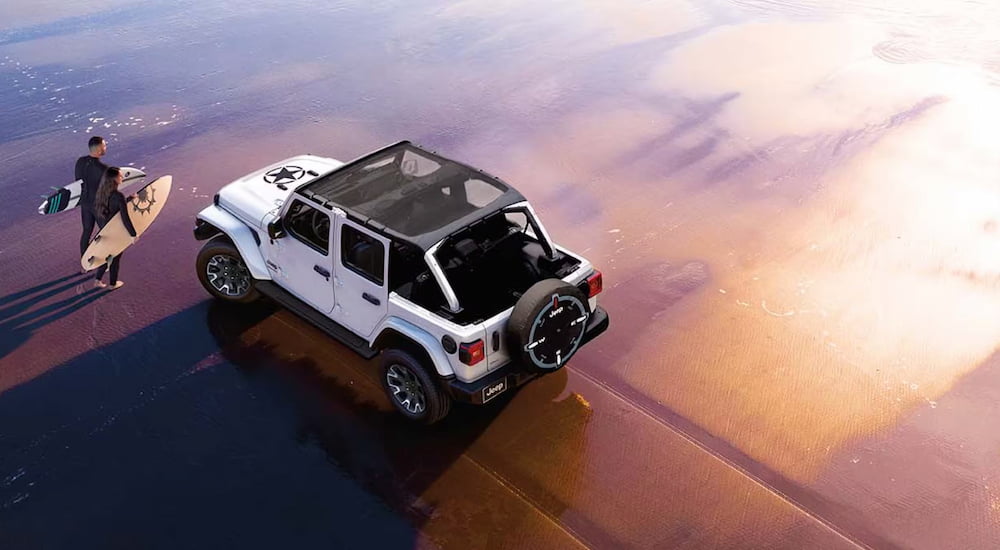
If you’re eager to explore the off-road lifestyle, but want a vehicle that knows how to mind its manners on paved roads, the Jeep Wrangler is here to serve. Few models can match the Wrangler’s clever combination of off-road performance and on-road comfort, and no SUV looks quite as good when it’s splattered with a hard-earned coat of mud. From the affordable Sport trim to the new Moab 392 and the adventure-ready Rubicon models, the Wrangler can fill any automotive niche while giving drivers a new sense of confidence when facing rough roads or off-road terrain. The Toyota 4Runner represents a pretty solid approximation of the Wrangler, but when you get right down to it, there’s just no reason to settle for an imitation when you can enjoy the genuine article. When you’re ready to experience life behind the wheel of a Jeep Wrangler, make LaFontaine Chrysler Dodge Jeep Ram Fenton your first stop.
Connect with us

